

Cold Windows, Warm Rooms: Custom Window Treatments That Help Keep the Draft Out
Cold Windows, Warm Rooms: Custom Window Treatments That Help Keep the Draft Out
The fabric you fall in love with is only part of the decision. How a window treatment is lined, measured, mounted, and fitted can make just as much difference to the finished room — particularly when a Nebraska winter arrives.
Windows are often one of the best features of a home. They bring in natural light, frame a view, and give a room its sense of openness. Come winter, though, that same expanse of glass can make a room feel noticeably colder. And if you've ever moved your favorite chair away from a window once the temperatures drop, you already know what we're talking about.
The good news? You don't have to choose between a beautiful room and a comfortable one. The right custom window treatments can help reduce heat loss, soften the architecture, and make a space feel more complete. The trick is choosing the right treatment for the window — and starting before winter is in full swing.
Drapery Is More Than a Pretty Piece of Fabric
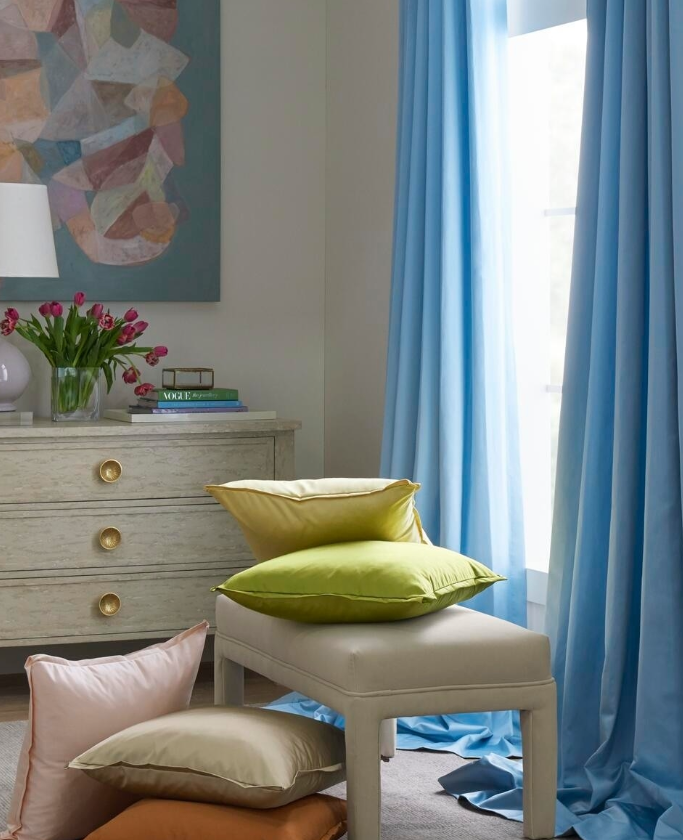
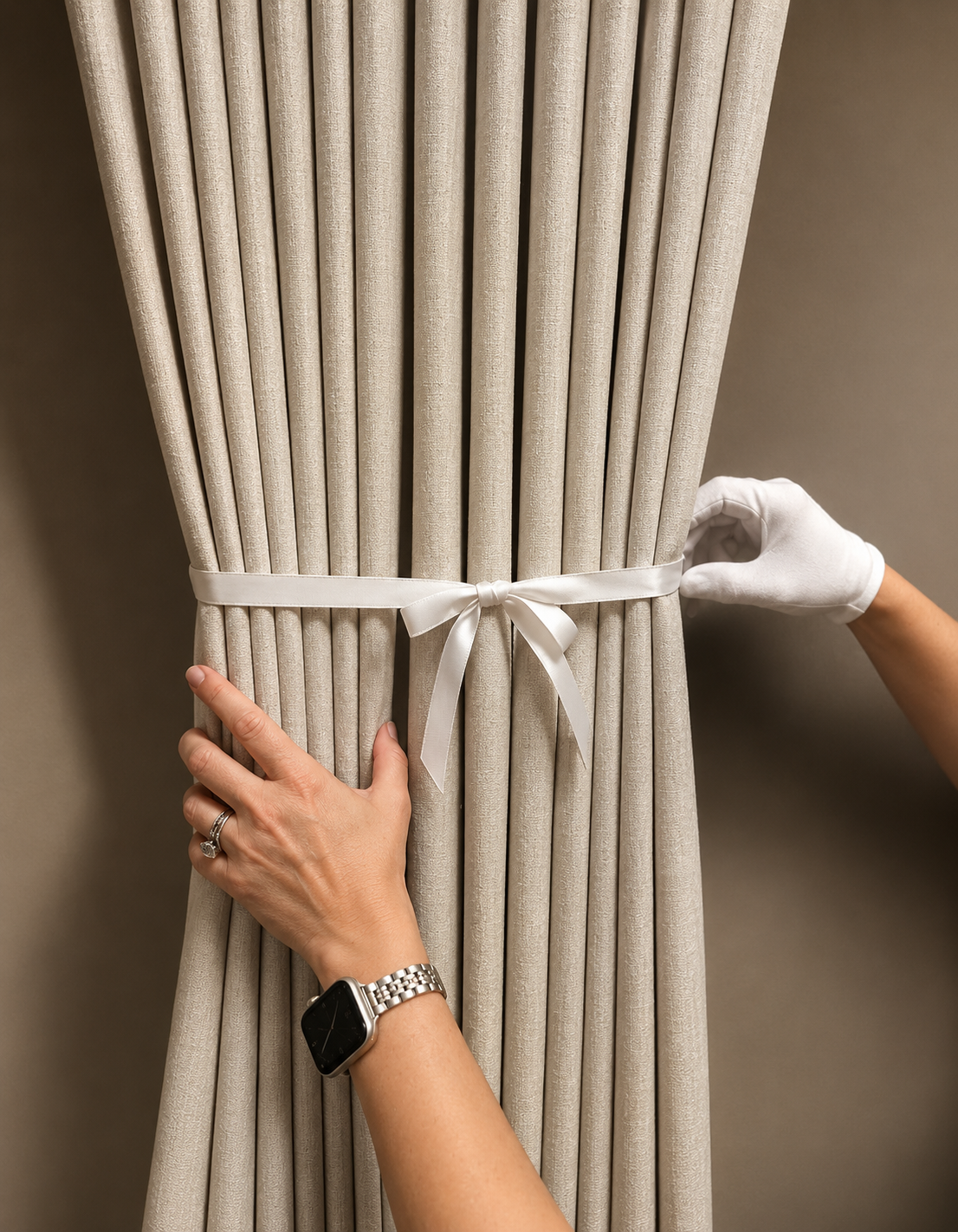
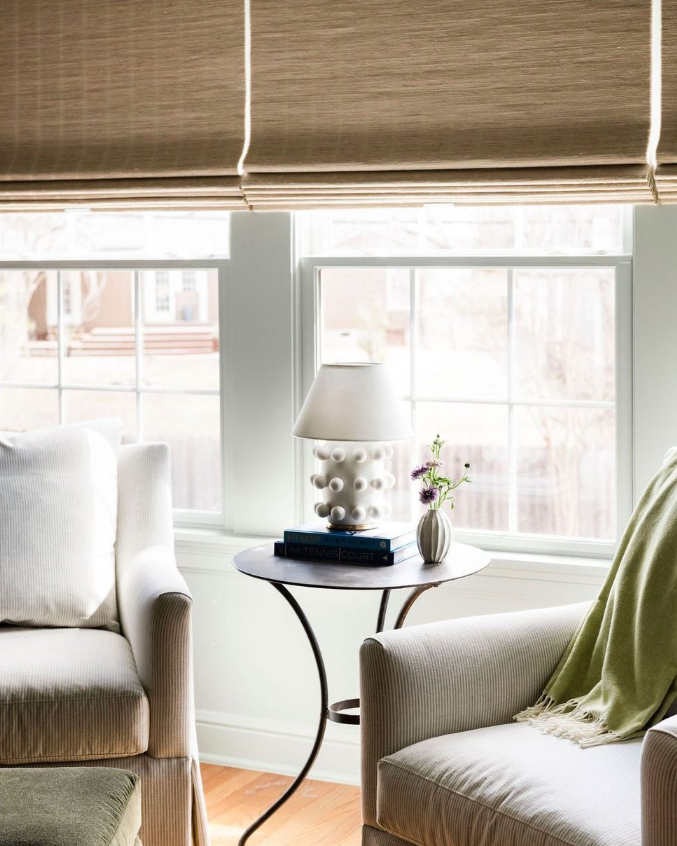
There's a reason a room with well-made drapery feels different. The fabric adds depth, the folds create movement, and the right proportions can make the entire space feel more finished. But there's another part of custom drapery that deserves just as much attention: what goes behind the fabric.
Lining gives drapery additional body and creates another layer between the room and the window. Interlining takes that a step further, adding a layer of material between the face fabric and lining. It creates a fuller, more substantial panel and can improve the treatment's insulating performance.
Neither needs to change the look you're after. A beautiful linen can still look like linen. A patterned fabric can remain the focal point. The difference is in how the finished panel hangs and how it's constructed.
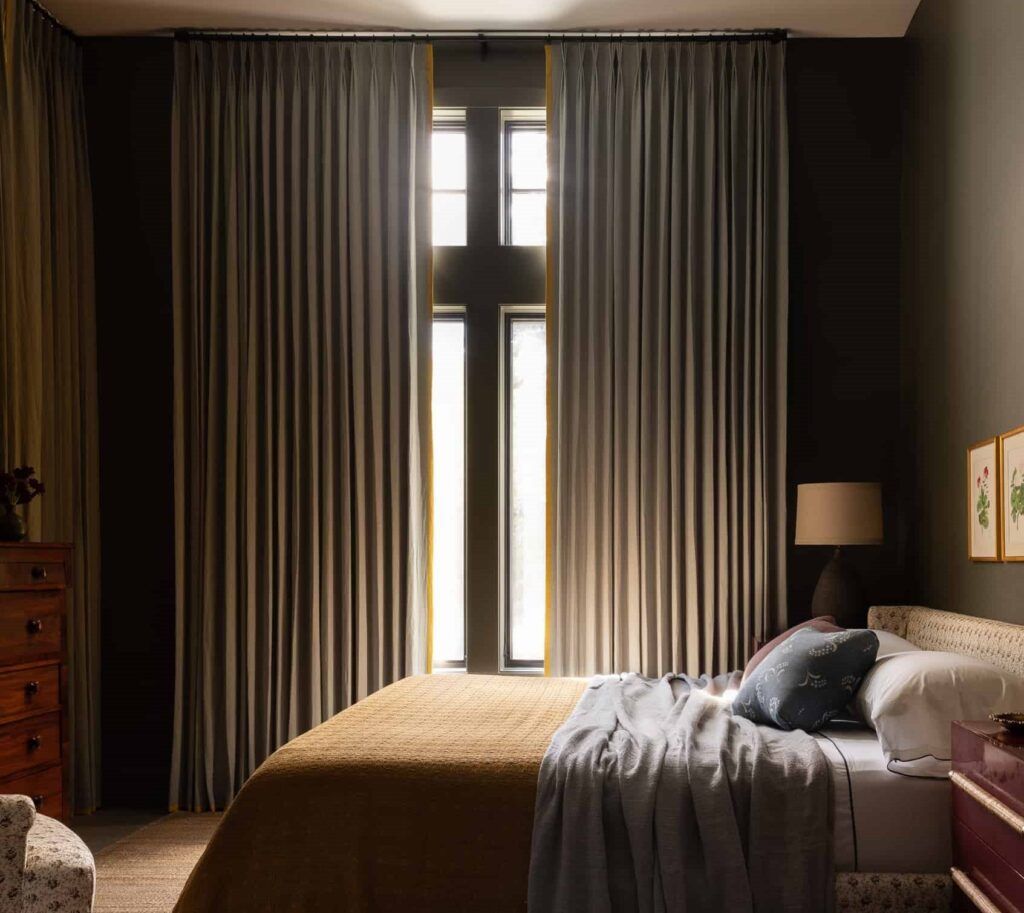
Then there's the way the drapery is installed. Fullness, length, rod placement, and coverage at the sides all affect the final result. Panels that are too narrow or don't adequately cover the window leave more exposed glass than intended. A well-planned installation considers how the drapery looks when open, how it closes, and how it relates to the rest of the room.
This is where custom window treatments make a difference. Instead of finding a panel that almost fits, you can choose the fabric, lining, hardware, and dimensions specifically for your home.
And no, you don't have to sacrifice good design to get there.
Those Big Windows? Let's Talk About Them.
Northeast Nebraska homes have plenty of windows worth showing off. Picture windows, sliding patio doors, and large expanses of glass bring in beautiful daylight and make the outdoors part of the interior. They're also worth thinking about when cold weather arrives.
The goal isn't to cover up a beautiful window just because it's winter. It's to make the most of it.
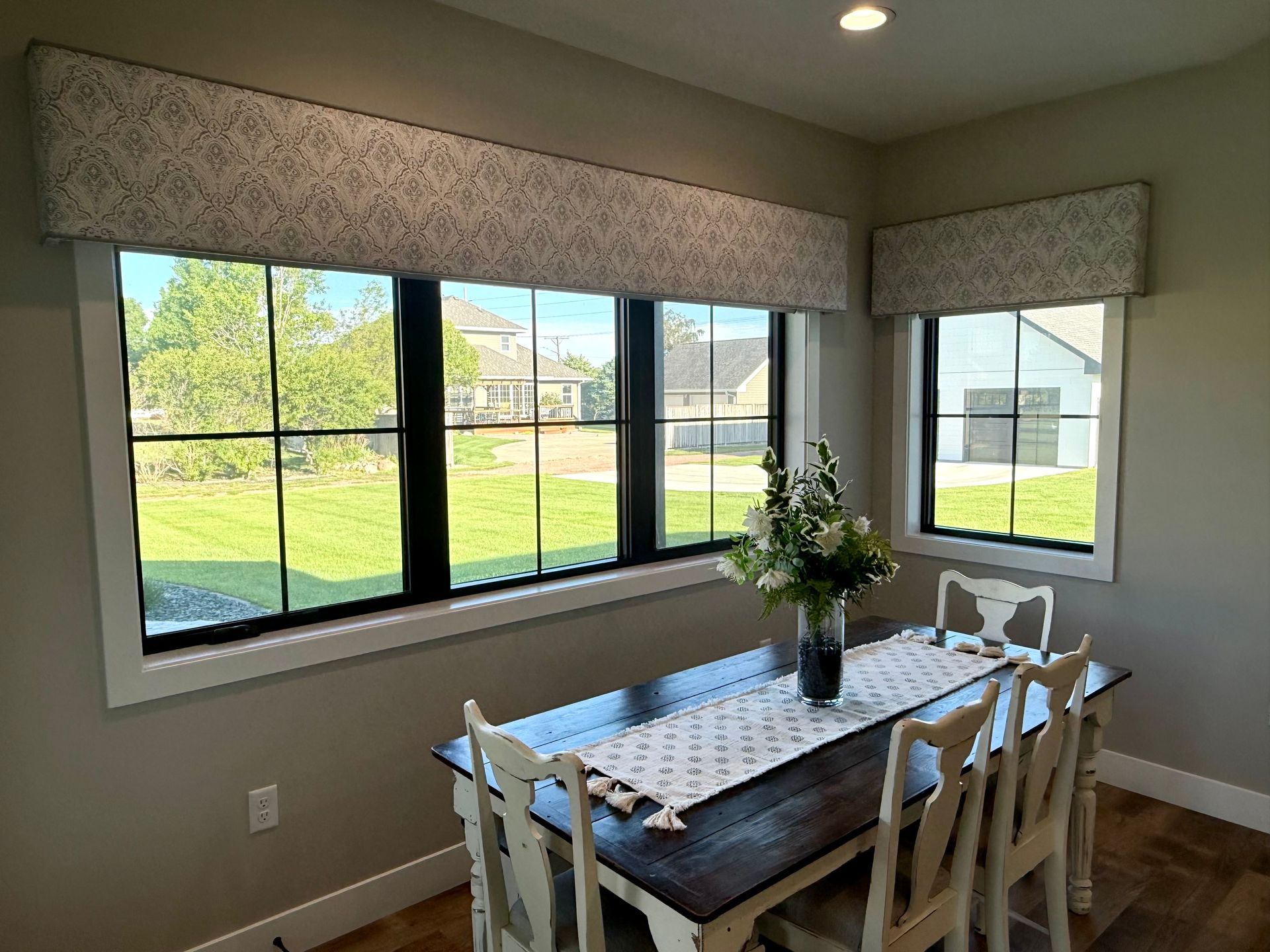
For a large picture window, custom drapery can frame the glass without obstructing the view when the panels are open. Extending the hardware beyond the window frame allows the fabric to stack to the sides, keeping more of the glass exposed during the day. When closed, properly fitted panels provide an additional layer over the window.
Sliding patio doors require a little more planning. The treatment needs to work with the way you enter and exit the room, not become something you have to wrestle with every time you let the dog outside. A suitable traverse rod or motorized drapery system can make wider openings easier to manage.
And for tall or hard-to-reach windows, motorization is worth considering from the start rather than trying to solve the problem after installation.
Every window has its own requirements. The most successful solution is the one that accounts for the architecture, the way you use the room, and the look you want to achieve.
Cellular Shades: A Practical Choice That Still Looks Good
Not every window needs layers of fabric. Sometimes a clean, tailored shade is exactly what the room calls for.
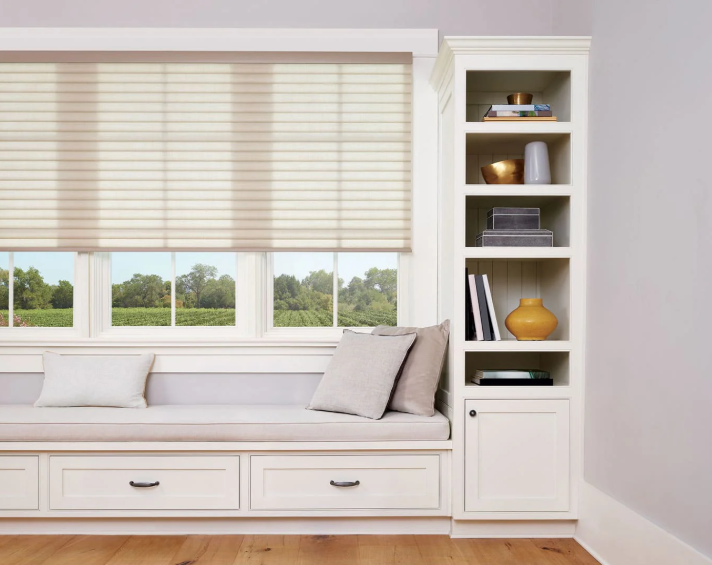
Cellular shades, also known as honeycomb shades, are designed with air pockets that help slow heat transfer through the window. They're a practical choice for homeowners who want better insulation without adding bulky window treatments.
Hunter Douglas takes this concept further with Duette® Architella® Honeycomb Shades. The design features a smaller honeycomb cell tucked inside a larger one, creating an extra layer of insulation within the shade itself. It's a small difference in construction that can make a meaningful difference in how a room feels during the colder months.
They're especially versatile in bedrooms, offices, kitchens, and other spaces where a streamlined appearance makes sense. Depending on the fabric selected, they can filter daylight, provide privacy, or block light for sleeping.
Fit matters here, too. Custom-sized cellular shades are made for the individual window, allowing for a more precise fit than a standard off-the-shelf option. The mounting style and available space within the window frame help determine which configuration will work best.
And if you're thinking that shades alone might leave a room feeling a little unfinished, consider layering them with drapery.
This combination is one of our favorite ways to approach a window. The cellular shade provides everyday light control and an insulating layer, while drapery introduces the color, texture, and softness that make the room feel designed. You get the practical benefits of both without asking one treatment to do everything.
Motorized Shades: Because Beautiful Windows Shouldn't Be Difficult to Use
A window treatment can be perfectly selected and beautifully installed, but if it's difficult to operate, you may find yourself leaving it in the same position day after day.
Motorized shades make everyday adjustments much easier, particularly on tall windows, expansive walls of glass, and windows behind furniture. Depending on the system, you can operate them with a remote, an app, or compatible home automation controls.
That convenience has a practical benefit in winter. Opening shades to welcome sunlight and closing them as evening approaches becomes a simple part of the daily routine. Sunlight can provide useful passive warmth during the day, while closing an appropriate window treatment at night can help reduce heat loss. The actual results depend on the window, the shade, and the home's construction.
Motorization also allows multiple shades to operate together, which is particularly useful when a room has several windows that need to be managed at once.
It's a worthwhile consideration when planning custom window treatments, especially if you're already investing in a room you'll enjoy for years to come.
Why October Is a Good Time to Start
Here's the part that's easy to overlook: custom window treatments aren't typically an overnight purchase.
You choose the fabric and hardware, arrange professional measuring, approve the selections, and allow time for fabrication before installation. Depending on the products and the scope of the project, that process can take several weeks or longer.
That's why October is a sensible time to start planning for winter. It gives you the opportunity to explore options, make decisions without rushing, and get your project underway before the coldest weather settles in. Actual completion depends on product lead times and scheduling, so starting early is no guarantee of a particular installation date — but waiting until the first serious cold snap certainly leaves you with less time.
You also don't need to tackle every window in the house at once.
Start with the room that feels coldest, the bedroom where you struggle to stay comfortable, or the large window that seems to dominate the temperature of your living space. An in-home consultation can help you identify where a new treatment may be most useful and which options deserve consideration.
A good plan is about more than adding fabric to every window. It's about making informed decisions that suit your home.
Custom Window Treatments in Norfolk, Nebraska
One of the best parts of choosing custom window treatments is that the process starts with your home, not a predetermined selection of products.
At Captivating Windows, fabric, lining, hardware, and operating systems are considered in the context of the room they're intended for. The proportions of the window, the existing finishes, the quality of the natural light, and your preferences all help shape the final design.
Our Norfolk, Nebraska showroom gives you the opportunity to see and feel fabrics in person, compare textures, and explore options with guidance from our team. Because a fabric can look very different on a screen than it does in your own home, seeing materials firsthand is an important part of the process.
We also offer in-home consultations, professional measuring, and installation for homeowners in Norfolk and throughout northeast Nebraska.
Whether you're considering lined drapery for a living room, cellular shades for the bedrooms, or motorized shades for a wall of windows, we'll help you explore solutions that work for your space and your priorities.
Winter is coming. Your window treatments can be ready for it — and look just as good when spring returns.
Ready to get started? Visit Captivating Windows in Norfolk, Nebraska, or contact our team to schedule an in-home consultation.