

Custom Draperies in Norfolk, NE
Thinking about custom draperies for your Norfolk, NE home? See why northeast Nebraska homeowners are choosing drapery panels for sound, style, and fit.
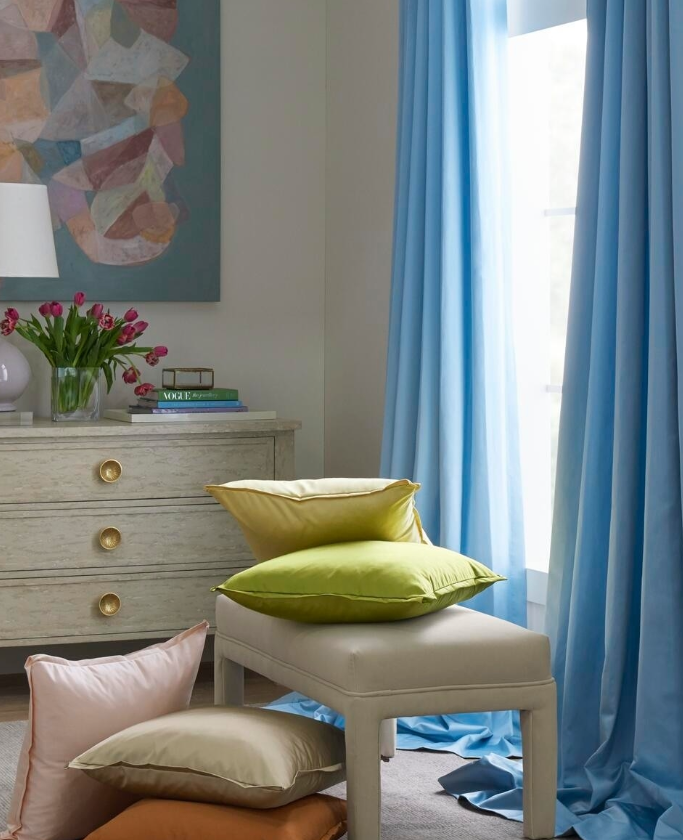
Why Custom Draperies Are Having a Moment in Northeast Nebraska Homes
There's a shift happening in local living rooms and dining rooms right now. For years, the trend was bare windows, or maybe a simple roller shade tucked out of sight and forgotten. But drive through Norfolk, Wayne, Battle Creek, Pierce, Madison, or Stanton today and you'll start noticing it: soft panels framing a window, pooling just slightly at the floor, moving a little when the furnace kicks on. Custom draperies are back — and once you understand what they're actually doing for a room, it's easy to see why northeast Nebraska homeowners are asking for them.
This isn't a passing design fad. It's a return to something homeowners had quietly lost: rooms that feel finished, quiet, and warm instead of just functional. If you've been eyeing your own windows and wondering whether custom draperies are worth the investment, here's what's really driving the shift in this area — and what to think about before you start.
They Change How a Room Sounds
This is the benefit nobody talks about, and it's usually the first thing people notice once they've lived with drapery panels for a week. Hard surfaces — windows, hardwood floors, drywall, vaulted ceilings — bounce sound around a room instead of absorbing it. That bounce is exactly why open-concept spaces and rooms with tall ceilings can feel loud even when nobody in them is being particularly loud. Voices carry. The TV seems to need to be louder than it should. Dinner conversation with a full table competes with its own echo.
Fabric works the opposite way: it absorbs sound instead of reflecting it. A floor-to-ceiling drapery panel acts almost like a quiet sponge for a room, softening echo and cutting down on that hollow, bright quality that open, hard-surfaced spaces tend to have. In a newer farmhouse-style build with tall ceilings, big windows, and wood or tile floors — a very common combination in this area — that acoustic difference is noticeable the very first evening.
It's a benefit that's easy to underestimate until you feel it. A room can look done and still sound unfinished. Drapery is one of the few design choices that fixes both at once.
Layers Read as Intentional
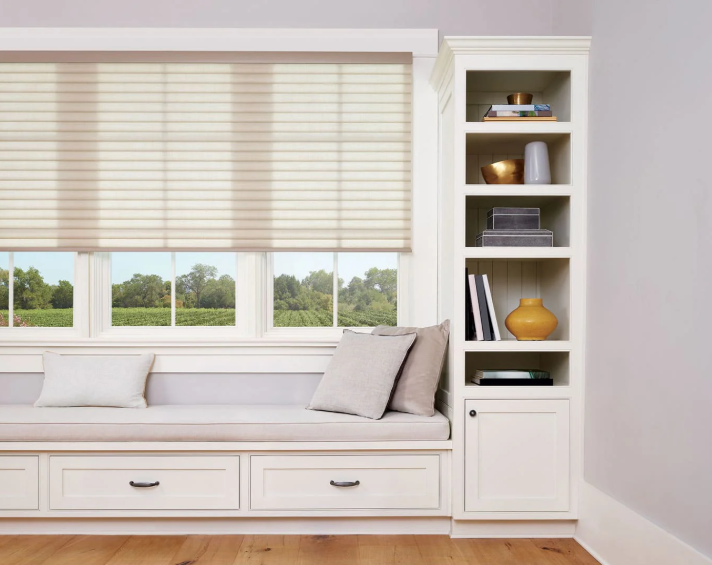
There's a real, visible difference between a window with just a shade or blind and a window with a shade layered under a drapery panel. The first reads as finished. The second reads as designed. That distinction — finished versus designed — is really the whole story of why layering has taken over as the direction homeowners are asking for.
Think about the rooms that tend to stop people in their tracks, whether in a magazine, on Pinterest, or in a friend's home. It's rarely one dramatic piece doing all the work. It's almost always layers: a rug over hardwood, pillows in mixed textures, a gallery wall instead of one piece of art, and windows dressed instead of just covered. Layering is what makes a room feel gathered over time by someone with an eye for it, rather than furnished in a single trip.
Drapery panels are one of the most efficient ways to bring that layered quality into a room without a full remodel. You don't have to reupholster furniture or repaint to get this effect. A single well-chosen pair of panels, hung at the right height and width, does more visual work in a room than almost anything else you could add for the same effort.
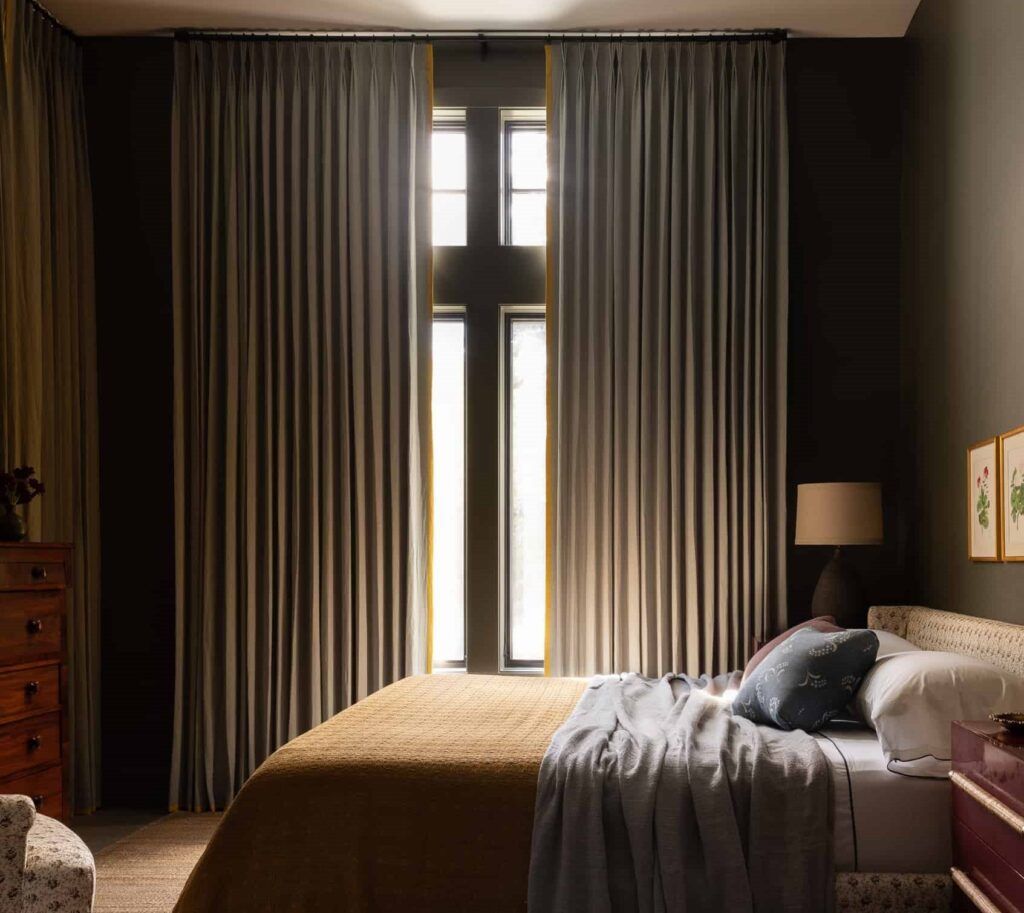
There's also a technical piece to this that's easy to miss: height and width matter enormously. Panels hung too low, too close to the window frame, or too skimpy in width are the single most common reason a drapery installation falls flat instead of looking intentional. Hanging hardware higher and wider than the window itself — so the panels frame the glass rather than hug it — is what makes a ceiling look taller and a window look larger. It's a small technical detail with an outsized visual payoff.
Custom Draperies: The Fit Is the Whole Point
Off-the-shelf panels from a big box store come in a handful of standard lengths, a handful of standard widths, and a limited, mass-produced run of fabrics. They're made to fit an average window in an average room — which means they rarely fit the actual proportions of your window. That's the reason so many homes end up with panels that look slightly "off": too short, too skimpy, hung too low, puddling in the wrong way or not at all.
Custom drapery solves this at the root, because it's built around your window, your ceiling height, and the specific fullness you want. That fullness is worth understanding, because it's the detail that separates a panel that looks rich and substantial from one that looks flat and thin. A fuller panel uses considerably more fabric per width than a standard off-the-shelf one — extra yardage you'd never get from a pre-made option — and that extra fabric is exactly what creates the soft, gathered look that reads as tailored instead of purchased.
Custom also opens the door to fabric lines that simply aren't sitting on a shelf at every other house in town. That's part of why a custom drapery installation tends to be the one detail visitors comment on when they walk into a home — it doesn't look like anything they've seen at a neighbor's or in a catalog, because it isn't.
They Do Quiet, Practical Work Too
Beyond sound and style, lined drapery panels do real, practical work day to day. A proper lining helps buffer temperature swings near windows, which matters in a region that swings from genuinely cold winters to genuinely hot summers — those big windows that let in beautiful light in July are often the same windows losing heat in January. Lined panels also give you a level of light control and privacy that a shade alone can't fully match, especially on street-facing rooms or bedrooms that need to stay dark past sunrise.
The daily rhythm is simple: closed in the evening for privacy and warmth, opened and stacked neatly to the side during the day for light. It's a small habit, but it changes how a room feels at both ends of the day in a way that a fixed shade or blind can't replicate.
Choosing a Fabric That Will Actually Hold Up
One question that comes up constantly in the showroom: how do you pick a fabric that looks the way you want and survives real life? A few things to weigh:
- Light exposure. South- and west-facing windows get the most direct sun, which fades and weakens fabric over time. Solution-dyed or performance fabrics hold their color far longer in those rooms than a delicate silk or linen blend would.
- Room function. A formal dining room or living room can handle a more delicate fabric than a sunroom, mudroom, or a room with pets and kids moving through it daily.
- Weight and drape. Heavier fabrics like velvet or a substantial linen blend hang with more structure and pool beautifully at the floor. Lighter fabrics like linen-cotton blends or sheers move more and let in filtered light — a good option layered under a heavier panel rather than as the only layer.
- Pattern scale. In a smaller room, a large-scale print can overwhelm; in a room with tall ceilings and generous windows, a small print can disappear. Bringing a swatch home and looking at it against your actual wall color and furniture, in your actual light, is the only way to really know.
This is exactly why swatches matter more than photos on a screen or a sample in a showroom under different lighting. Fabric behaves differently in your house than it does anywhere else.
Where to Start
If this has you looking at your own windows differently, our Fall Fabric Sale is the easiest time of year to start exploring — the selection is wider than usual, and it's a low-pressure way to bring swatches home and see them in your own light before committing to a full room. Stop by the showroom in downtown Norfolk, or give us a call at 402-371-8494, and we'll help you figure out what custom draperies would actually look like in your northeast Nebraska home — from fabric and fullness down to how high that hardware should go.